Published September 17, 2026 by Miami Parking Lot Paving
This is the most expensive decision a property owner makes about a parking lot, and it turns on one question that has nothing to do with how the surface looks: is the base underneath still carrying the load? Get that right and an overlay buys years for a fraction of the cost. Get it wrong and you pay for new asphalt twice.
An overlay replaces the surface and keeps everything below it. The worn top layer is milled off, usually 1 to 2 inches on a parking lot, the millings are hauled away and recycled, and a new course of hot mix asphalt is placed over the existing base after a tack coat bonds the two together.
Milling is what makes it work properly. It removes the damaged material rather than burying it, it keeps the finished surface at the right height against curbs, catch basins and door thresholds, and it leaves a rough texture for the new asphalt to grip. An overlay poured over an unmilled lot raises the whole surface, buries the curb reveal and traps water along the edges.
A real overlay project is not only milling and paving. Failed areas are cut out and rebuilt full depth first, so the new surface goes over sound pavement everywhere. Drainage structures are reset so their frames end up level with the finished surface. Phase joints are placed on stall lines, never in the wheel path of a drive aisle.
An overlay inherits the geometry underneath it. The grades stay where they were, so a lot that never drained properly will not start draining because it has a new surface, and the slopes at the accessible spaces have to be protected during milling or a compliant space can end up out of compliance. It also inherits the stall layout unless you are restriping anyway, though since the lines go back on afterward, an overlay is a good moment to redesign them.
What you get at the end is a lot that looks and drives like new, with the same underlying structure it had the day before. That is the whole proposition: most of the visible benefit, none of the excavation.
Replacement rebuilds the lot from the ground up. The existing pavement is demolished and hauled off, the site is excavated to the design depth, and the subgrade is graded toward the drainage plan and compacted.
Then the base is rebuilt. Crushed limerock is placed in lifts and each lift is compacted and checked for density before the next goes down. Nothing goes down until the base passes its density check, because a weak area caught here is trivial to fix and the same area caught after paving is not. On South Florida sites this step is where the project is won or lost, because flat ground and a high water table punish a base that was not built correctly.
After the base come the asphalt courses, a structural course to carry the load and a surface course to shed water, with thicker sections in truck lanes and at dock approaches. Drainage structures go in with the grades: catch basins, trench drains where trucks back up, curb and gutter runs. Striping and signage finish it.
Some of the extra cost buys corrections rather than just new pavement, and on a lot with long-standing problems that changes the value of the comparison.
You can run most of this yourself in twenty minutes with a phone camera. Each observation below points one way or the other, and the pattern across all six is what matters, not any single finding.
| What to look for | Points to an overlay | Points to replacement |
|---|---|---|
| Crack pattern | Long single cracks, rectangular block patterns, cracks that follow old joints | Connected webs like reptile skin, especially spread over large areas |
| Wheel paths in truck lanes | Flat, no visible grooves | Ruts, depressions or shoving where vehicles brake and turn |
| Old patches | Still flush and intact after several years | Cracked, sunken or broken up again within a season or two |
| Standing water a day after rain | None, or one shallow spot with a clear surface cause | Puddles that return to the same places every storm |
| Behavior under a loaded truck | No visible movement | Flexing, springing, or water pumping up from cracks |
| Edges and around drains | Firm, supported | Crumbling, undermined, soft underfoot near basins |
Two of those deserve a note. The loaded-truck check is the most informative and the least used: stand safely beside the suspect area while a delivery truck rolls across it and watch the pavement, not the truck. Visible movement means the base is saturated or has lost its structure.
Standing water is the one people misread. A puddle can be a shallow surface dip on a perfectly sound base, which mills and repaves easily, or it can be the surface following a base that has settled underneath it, which does not. If the same puddle has been in the same place for years and has grown, assume the second.
There is a middle case worth knowing about, because it rescues lots that look like replacement candidates. If the damage is confined to the upper few inches of asphalt and the base below is genuinely intact, milling deeper than the usual 1 to 2 inches removes the failed material and a thicker overlay replaces it. The lot gets most of the benefit of reconstruction without the excavation and disposal.
That only works when the base is sound. Deep milling on a lot whose base has failed just exposes the failure, which is why the test above comes first and why a core is worth taking when the surface evidence is mixed. It also has a ceiling: once the existing asphalt is thin enough that milling would cut into the base, the option disappears.
It is worth asking about by name. A contractor who prices only a standard overlay and a full rebuild may not have considered whether a deeper mill and a thicker overlay would serve the lot for considerably less than reconstruction.
When the evidence points both ways, stop guessing and take a core. Drilling one, or opening a small test pit, puts the actual asphalt thickness and the actual base material in front of you instead of an inference drawn from the surface. On a decision worth this much, it is the cheapest information available, and no scope should be recommended without it.
Beyond the base test, five situations make replacement the right answer even when parts of the surface still look acceptable.
The two mistakes are not symmetrical, and knowing which one you are risking helps you decide how much evidence to gather first.
Overlaying a failed base is the expensive error. The new surface cracks through from below, usually within a season or two, in the same pattern that was there before. The money is gone, the lot is back where it started, and you still have to pay for the reconstruction you avoided. Worse, the failure often shows up first in the busiest areas, where the disruption of fixing it costs the most.
Replacing a sound lot is the cheaper error. You have overpaid, sometimes substantially, but you own a lot that will last and you have corrected grades and layout along the way. Nothing fails and nothing has to be redone.
That asymmetry is the argument for spending a little on a core sample and a careful assessment before committing. The information costs a fraction of either mistake.
The honest answer on most older commercial lots is a mix. It is normal for the heavy-traffic corners of a property to be past saving while the parking rows in front of the stores are perfectly good candidates for a new surface. A scope that prices one approach across the whole lot hides that, and a scope that maps it area by area is what makes phasing across budget years possible.
No figures here, because the numbers come from the lot. What is stable is the relationship between the two options, and it is large enough to drive the decision.
| Factor | Mill and overlay | Full replacement |
|---|---|---|
| Relative cost per square foot | Substantially less, because the base, the excavation and most of the drainage stay in place | Substantially more; excavation, base material and disposal are the added weight |
| What the money buys | A new surface on an existing structure | A new structure, corrected grades and the chance to redesign |
| Time on site | Days, phased by section | Weeks on most commercial lots, because base work and any inspections come first |
| How long a section is closed | Short. A section can be milled and overlaid in a day or a night and reopened once the mat has cooled | Longer. A section stays out of service through demolition, excavation, base placement and paving |
| Night and weekend work | Straightforward to phase after hours | Possible, but the noisy demolition and excavation stages are harder to fit into short windows |
| Disruption to tenants | Low. Most properties keep operating with parking near the doors throughout | Higher. More of the lot is unavailable at once and for longer |
| Expected service life | Shorter than a rebuild, and it depends on the base it was placed over | Longest, when the base and drainage are built correctly |
| Risk of being wrong | High if the base has actually failed; the new surface cracks through within a season or two | Low structurally, but you may have paid for a rebuild a sound base did not need |
The line in the table that matters most to a property manager is how long a given section is out of service, because that is what tenants and customers actually experience.
On an overlay, a section typically closes in the evening or on the property's slowest day, gets milled, gets paved, and reopens once the mat has cooled, often before the next business day. Customers see cones in one part of the lot and parking elsewhere. A mid-size plaza phased into three or four sections is finished within a working week or so plus striping, and no tenant ever loses access to their door.
On a replacement, that same section is unavailable through demolition, excavation, base placement, compaction and paving. Depending on the depth and any inspections, that can mean several consecutive days per section rather than one shift, so a larger share of the lot is out of use at once and for longer. The noisiest stages are also the hardest to confine to night windows.
Neither one has to close a property. Both are phased so an entrance, the fire lane and the accessible route stay open, and both come with written notices for tenants before each phase. The difference is how much parking is gone at any moment and for how many days in a row, which is exactly what to plan around when you pick the season.
Set against that comparison, the value of the base test is obvious. It is the cheapest step in the process and it decides the most expensive question, which is why a contractor who recommends replacement should be able to show you the evidence, and one who recommends an overlay should be able to show you the failed areas that will be rebuilt first.
One long-run point worth holding on to: an overlay placed while the base is still sound, then kept on crack sealing and sealcoating, can push a full rebuild out by many years. Deferring the cheap maintenance years is what brings the expensive rebuild forward.
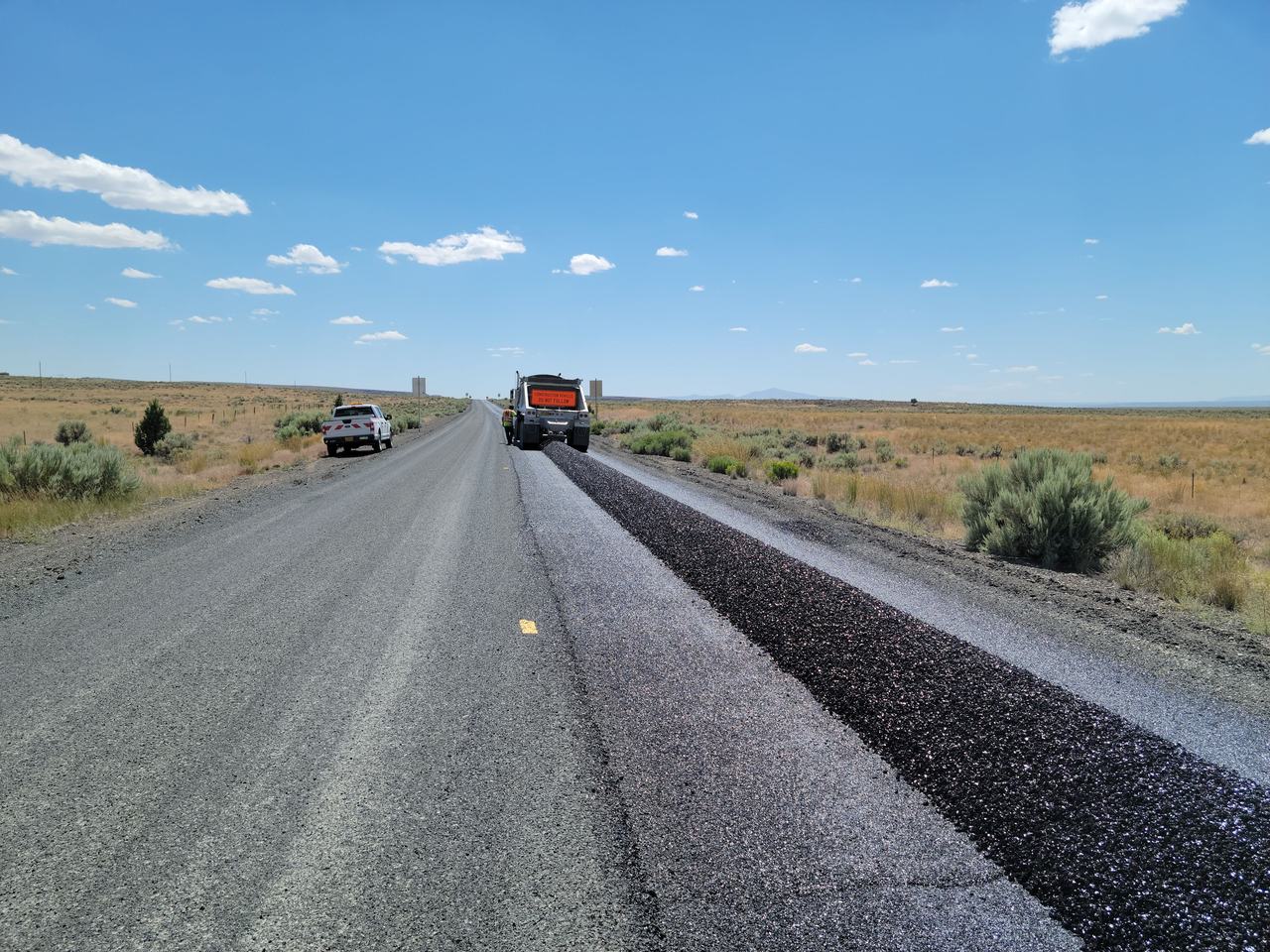
A site assessment runs the base test properly, maps which areas have failed and which have not, checks where the water actually goes, and cores the lot where the surface evidence is ambiguous.
The written scope that follows separates resurfacing from full replacement by area, with the cost drivers named, so you can rebuild the dock approach this year and overlay the customer parking next year if that is what the budget allows. Estimates are free. Call (786) 321-8089 or send the details below.
Related services: Asphalt Resurfacing, Asphalt Paving. Guide: Miami paving cost guide. Questions on a specific lot? Use the contact page.