New, replaced and reset parking blocks placed clear of walking routes.
📞 Call (786) 321-8089 Request a Free Estimate
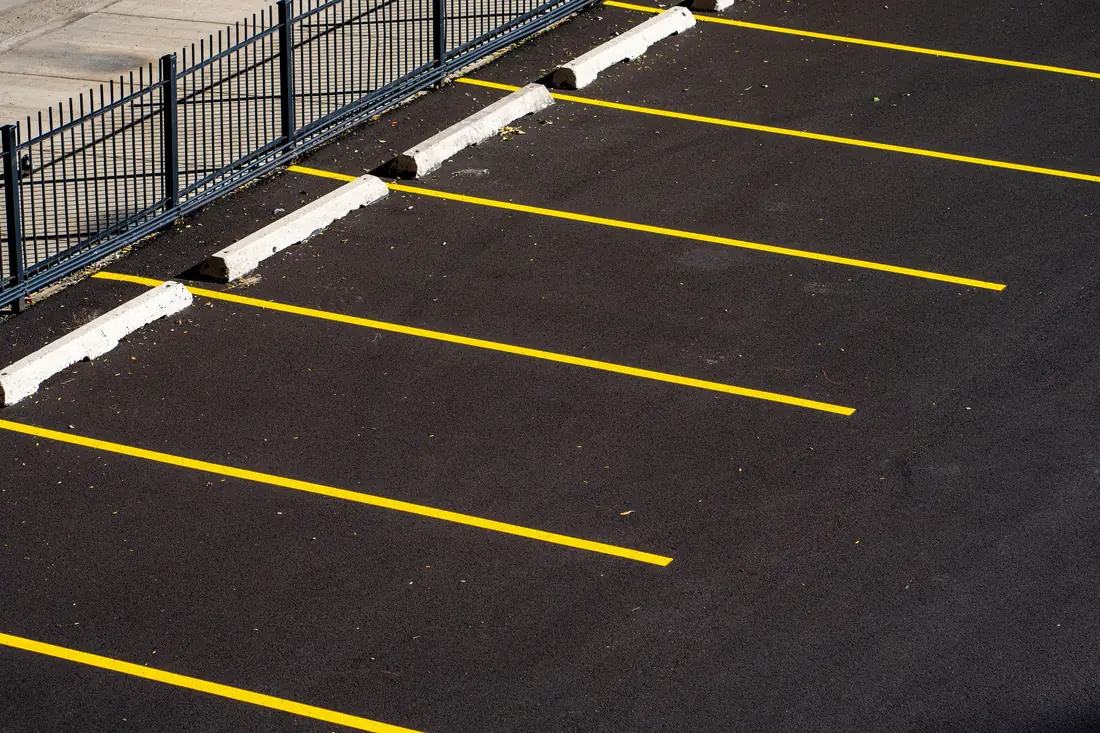
When bumpers roll over sidewalks, scrape storefronts or flatten landscaping, property managers, HOAs, retail plazas, office parks and medical offices call us. We install, replace and reset wheel stops on existing lots as part of our Miami commercial lot paving and upkeep, placing each one where nobody walking to the door will trip on it. A free on-site assessment starts with a call to (786) 321-8089.
Head-in stalls that face something a bumper can hit or overhang: a sidewalk, a storefront, a planting bed, a wall, a column or equipment. Stalls that face another row of parking, and pull-through stalls, usually do without them, and leaving stops out there removes a trip hazard.
A stop that is whole but loose can usually be reset. We lift it, pull the old pins, patch the holes and anchor it again in sound pavement. A stop that is cracked through, crumbling at the ends or showing bare steel gets replaced, since it will keep shifting.
They can be, so placement matters as much as installation. A stop belongs inside the stall, never across a walking path, an access aisle or an accessible route. Stops are painted to stand out against the asphalt, and any that sit where people cross are moved or removed.
Wheel stops, also sold as parking bumpers or car stops, usually announce the problem through damage to whatever sits at the end of the stall.
We work stall by stall, so only a few spaces are out of use at once.
We mark which stalls need a stop, which stops should come out, and where people actually walk to the doors.
Broken or misplaced stops are hauled away, and old pins are pulled or cut flush with the holes filled.
Crumbled asphalt under a stop is patched first. Where a whole row is failing, parking lot repaving comes before new stops.
Each stop is centered on its stall lines, anchored, and painted in a high-visibility color that is refreshed at each restripe.
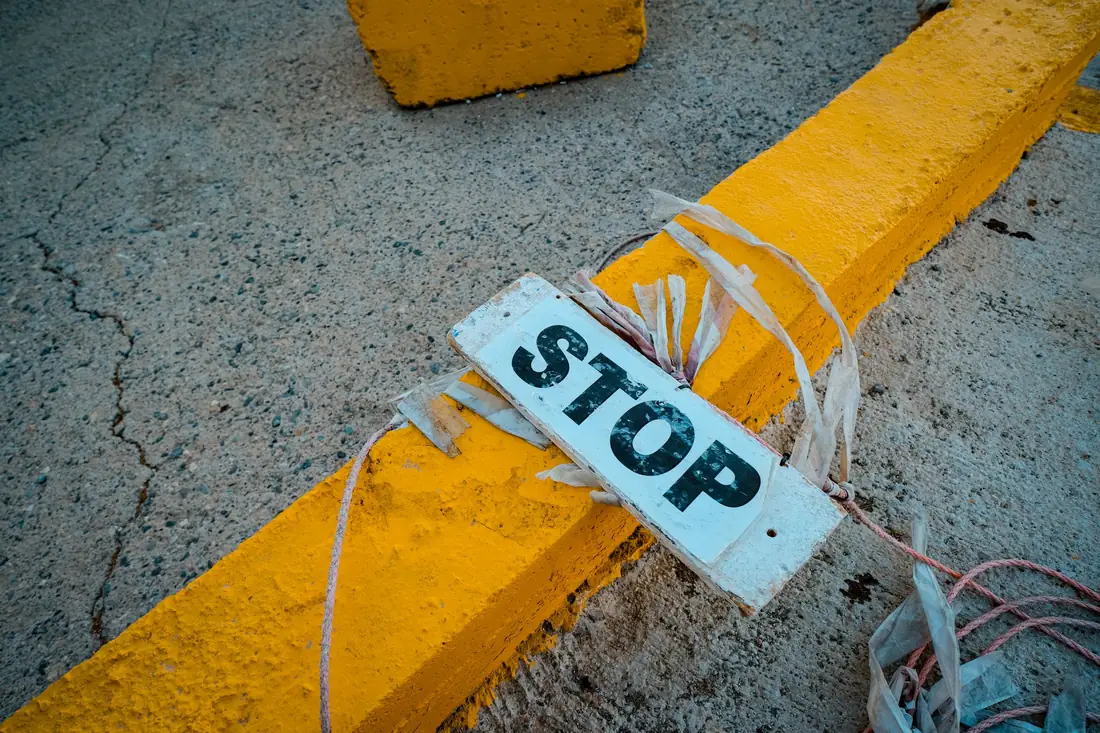
On asphalt, steel pins are driven through the stop and the pavement into the base, and they hold only as firmly as that material. On concrete, holes are drilled into the slab and the stop is fixed with anchors made for concrete or pins set in adhesive, which must cure before a car rolls into it.
On a lot about to be sealed, stops are lifted so the coat reaches the pavement under them, then reset after the cure and the new striping, lined up with the stalls they serve.
A stop keeps bumpers off the sidewalk, but it is also a low block people step over around parked cars. Layout has to get the first without the second.
See our ADA compliance work for the full accessible layout, and pair lifted or cracked walks with concrete sidewalk repair.
Pricing is per stop, and mobilizing is a fixed cost, so bundled work costs less per stop. These change the quote:
Price ranges appear only in the parking lot cost guide for Miami owners; your free assessment ends with an itemized quote listing every stop.
Salt air is hard on the steel. Near the coast, pins corrode faster and concrete stops crack and loosen around rusting steel, so coastal lots need more frequent checks.
On flat ground, rain sheets toward the inlets, and a tight row of stops can trap water and trash against the curb. We leave room for water to pass each stop's ends.
Hurricane season runs June 1 to November 30, so loose stops and bare pins belong on the May checklist. Changes to accessible parking often need a permit, and requirements differ among cities across Miami-Dade and Broward municipalities. Your city or county building department has the final word; see our permit FAQ.
Send the form or call (786) 321-8089 and tell us roughly how many stops are broken, loose or missing. A free on-site assessment follows, and the itemized quote prices every stop on its own line.