(786) 321-8089 Call for a Free Estimate Free Estimate

Parking Lot and Asphalt Repair in Miami

Parking lot repair is the work that keeps a small problem from becoming a paving project. A pothole at the entrance, a crack that lets every afternoon storm into the base, a low spot that holds water for days: each one is cheap to fix now and expensive to ignore. Miami Parking Lot Paving repairs commercial lots across Miami-Dade, Broward and Palm Beach counties, from a single pothole to a full round of patching after a storm.

This page covers the damage South Florida lots actually develop, how each type is repaired properly, what to inspect after a storm, why trip hazards are a liability issue as much as a paving one, and what moves the price of a repair job.

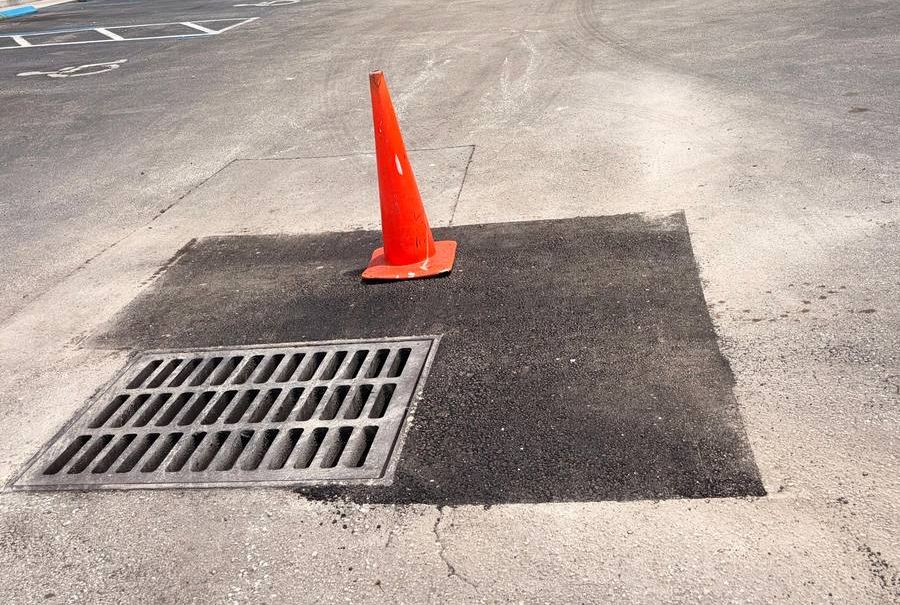
Fresh asphalt patch around a storm drain grate in a commercial parking lot, marked with a cone

📞 Call (786) 321-8089 Request a Free Estimate

Common Parking Lot Damage in South Florida

Most damage on a South Florida lot traces back to two forces: sun drying the surface out from above, and water softening the base from below. Knowing which one you are looking at tells you whether a surface fix will hold or the area needs to be rebuilt.

The first three are the ones that decide the scope. Potholes and linear cracks are surface repairs. Alligator cracking is a base repair no matter how small it looks, and a lot covered in it is a candidate for resurfacing or replacement rather than patching.

📞 Call (786) 321-8089 for a Free Site Estimate

Pothole Repair

A pothole repaired properly is cut out square, cleaned to solid material, refilled with compacted base and hot mix asphalt, and rolled flush. A pothole filled by shoveling cold mix into the hole and driving over it comes back with the next rain. The difference is what you are paying for.

How a permanent pothole repair is done

  1. The damaged area is marked past the visible edge of the hole, because the base failure is always wider than the opening.
  2. The asphalt is saw cut in straight lines to solid pavement and removed with the loose base underneath.
  3. The hole is cleaned and dried, and the base is rebuilt with compacted limerock or dense-graded aggregate to the right depth.
  4. A tack coat is applied to the cut edges so the new asphalt bonds to the old.
  5. Hot mix asphalt is placed in lifts and compacted with a plate compactor or roller until it sits flush with the surrounding surface.
  6. The joint is sealed so water cannot get in around the patch.

Temporary versus permanent

A temporary cold-patch fill has a place: a hole that opened in the entrance the day before a weekend, or storm damage that needs to be made safe before a crew can schedule permanent work. It is a stopgap, and the estimate labels it as one. Infrared repair is a third option for smaller potholes and failed patches: the existing asphalt is heated in place, reworked with fresh mix and compacted, which leaves a repair with no visible joint and no cut edge to seal.

Asphalt Patching

Patching covers the larger repairs: areas of alligator cracking, sunken sections, failed old patches and damage around drains. The method depends on whether the base has failed, and the estimate names the method for each area so you can compare bids on the same work.

On a lot with many failed areas, the math shifts. Once patching approaches a large share of the surface, an overlay with full-depth repairs underneath usually costs less per square foot and leaves a uniform surface. The site assessment runs that comparison and the estimate shows both.

Crack Filling and Sealing

Crack sealing is the highest-return repair on any South Florida lot, because every open crack is a path for the daily summer storm to reach the base. Sealing cracks before the wet season keeps water out of the base, and a sealed lot needs far fewer potholes and patches later.

Which cracks get sealed and how

Crack sealing pairs naturally with sealcoating. Cracks are sealed first, the sealant cures, and the sealcoat goes over the whole surface, which is why the two are usually scheduled as one project. On a maintenance plan, crack sealing repeats every year or two and sealcoating on a longer cycle.

Drainage Problems and Standing Water

Standing water is a repair problem before it is a paving problem. On a flat South Florida lot, water that sits for a day after a storm is soaking into the base, and the pothole that appears in that spot next month is the result. Fixing the water fixes the cause.

The site assessment for a repair job includes a look at where the water goes, ideally after a rain. A patch placed in a low spot without fixing the drainage is a patch you will pay for again.

Post-Storm Inspections

After a tropical storm or a hurricane, walk the lot before the tenants do and write down what you see with photos. The list below is the inspection we run after a storm, and it works as a checklist for a property manager the morning after.

  1. Debris and downed limbs. Clear anything blocking drive aisles, the fire lane and the accessible route first.
  2. Standing water. Note every spot still holding water and check whether the nearest catch basin is clogged with leaves and sand.
  3. Washed-out edges. Look along curb lines, unsupported edges and around catch basins for pavement that is undermined or crumbling.
  4. New potholes and heaving. Storm water saturates the base quickly; new holes and lifted areas show up within days.
  5. Displaced wheel stops, bollards and signs. Loose hardware is a trip and vehicle hazard and often reveals a failed anchor.
  6. Sinkholes and soft spots near drains. Water moving under the pavement can wash out base around pipes; a soft spot next to a basin gets marked off immediately.
  7. Striping and accessible-space signage. Sand and debris scour paint; check that the accessible spaces, aisles and signs are still visible and standing.
  8. Document everything. Dated photos of each item support insurance claims and show that hazards were identified and addressed promptly.

A pre-season walkthrough in late spring catches most of this before the storm does. Clearing catch basins, sealing cracks and patching edge failures ahead of June 1 is the cheapest storm preparation a lot can get; the maintenance page covers the seasonal checks.

Liability and Trip Hazards

A pothole or a lifted patch is a trip-and-fall claim waiting for a plaintiff, and a lot that has been reported and not repaired is the hardest kind to defend. For property owners, HOAs and managers, repair is a liability program as much as a pavement program.

The practical program is simple: inspect on a schedule, document what you find, cone or mark off hazards the same day, and repair inside a set window. Small repairs scheduled monthly cost less than one claim, and the inspection records are the evidence that the property was managed.

Keeping the lot open during repairs

Repairs rarely close a lot. Individual patches are coned off and traffic routes around them, entrances and the accessible route are kept open, and larger patching runs are scheduled after hours or on the property's slowest day. Cure time is short for most patches, so a section is usually back in service the same day or the next morning.

Questions to ask a repair contractor

Repair Cost Factors

Repairs are quoted from the assessment, and the estimate lists each area with its method so you can see what drives the total. No two lots land in the same place, and these are the reasons why.

For a lot with widespread damage, the assessment compares the repair total against resurfacing so you are not paying to patch a surface that should be replaced. The cost guide explains how repairs, overlays and new construction compare.

Repair FAQ

Get a Free Repair Estimate

Describe what you are seeing, where it is on the lot and whether any of it is at an entrance or on the walking path to the door. Photos help. The assessment maps each area with its repair method, checks where the water goes, and the estimate lists every repair by area so hazards can be scheduled first and the rest phased as your budget allows.

Related services: Asphalt Resurfacing, Parking Lot Maintenance. Service areas: Hialeah, North Miami Beach. Guide: Parking lot paving cost in Miami.

📞 Call (786) 321-8089

📞 Call (786) 321-8089 for a Free Estimate